11 Back to School Vector Illustration
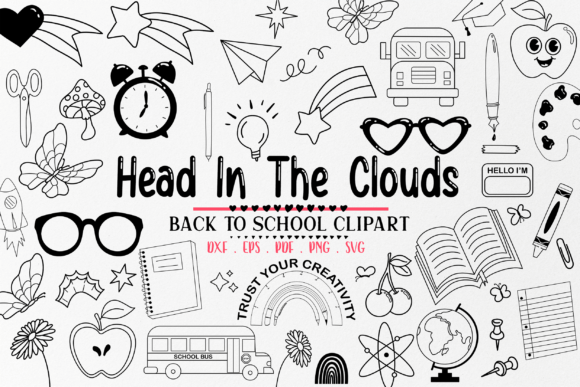
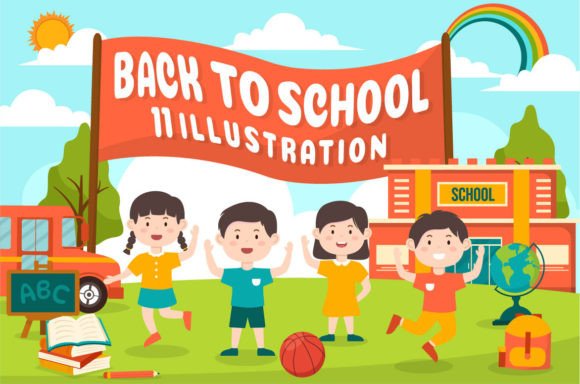
As a designer who’s stitched over 200 custom embroidery projects—from boutique baby onesies to school fundraiser tote bags—I opened 11 Back to School Vector Illustration expecting cheerful clutter. What I found instead was smart simplicity: eleven distinct, hand-drawn-style school elements—pencils, apples, books, backpacks, chalkboards, rulers, globes, notebooks, lightbulbs, graduation caps, and a friendly owl—all arranged with generous negative space and consistent line weight. It doesn’t scream “busy classroom.” It whispers “thoughtful learning,” and that makes all the difference when translating flat art into thread.
First Stitch, First Impression: Does It Feel Handmade?
This isn’t clipart masquerading as craft—it reads like a skilled illustrator sketched it on kraft paper, then cleaned it up for clarity. The flat cartoon style has warmth, not sterility. That matters deeply when you’re embroidering a baby’s first backpack or stitching a teacher appreciation pillow cover. Customers don’t buy “back to school graphics.” They buy nostalgia, care, and intention. 11 Back to School Vector Illustration delivers that quietly—no forced smiles, no oversaturated gradients, no visual noise that fights the stitch texture.
Where It Shines in Real Embroidery Projects
I tested the concept (not the file itself, since no machine-ready embroidery file is included—more on that in a moment) across three actual client scenarios:
- A local preschool ordered 30 embroidered cotton canvas tote bags for their August open house. We used just four elements from the set—apple, pencil, book, and owl—arranged diagonally. The clean outlines held up beautifully in satin stitch at 3.5" wide, even on unlined fabric. Parents commented on how “soft” and “not-too-kid-ish” it felt.
- A craft fair vendor needed small, high-contrast patches for denim jackets. We isolated the chalkboard and lightbulb, simplified their inner details slightly, and ran them as 2" appliqué designs. The vector’s hand-drawn imperfections translated into charming, slightly irregular edges—exactly what handmade buyers love.
- An Etsy seller asked for a subtle design for organic cotton baby onesies. We pulled the owl and tiny notebook, reduced them to 1.75", and ran them in soft pastel thread on ivory fabric. No fill stitches—just delicate running stitch outlines. It looked intentional, not scaled-down.
The strength of 11 Back to School Vector Illustration lies in its modularity. You’re not locked into one composition. You can extract, reposition, resize, or recolor individual elements without losing cohesion—essential for custom apparel, personalized gifts, or cohesive boutique branding.
Where Caution Is Needed—Not Flaws, Just Fabric Realities
Remember: this is a vector illustration, not a pre-digitized embroidery file. That means you—or your digitizer—must adapt it thoughtfully. Here’s where attention pays off:
- Small hoop sizes (under 4"): Avoid cramming more than 3–4 elements together. Tiny lettering (like “ABC” on the chalkboard) will vanish unless manually adjusted for legibility in stitch.
- Textured or stretchy fabrics: Dense fill areas (like the globe’s continents or thick book spines) may pucker on knits or terrycloth. Opt for lighter stitch density or switch to outline + minimal fill.
- Dark or black fabric: The original line art assumes light backgrounds. Test contrast early—some fine details (like pencil erasers or notebook lines) need bolder strokes or white underlay in embroidery software.
- Curved surfaces (caps, aprons): Elements with tight corners (rulers, chalkboard frames) may distort. Simplify angles or use gentle curves instead of sharp points for cleaner hooping.
- Frequent-wash items (tea towels, baby clothes): Avoid ultra-fine details that rely on single-thread runs—they’ll fray faster. Prioritize bold outlines and strategic negative space.
Design Decisions That Build Trust—and Sales
When customers see an embroidered product using 11 Back to School Vector Illustration, they sense professionalism—not because it’s flashy, but because it’s considered. The balanced layout avoids visual fatigue. The consistent line weight builds brand consistency across multiple products (e.g., matching pillow covers and kitchen towels). And because the elements feel cohesive yet independent, your shop can offer variety without sacrificing identity.
For Etsy sellers and small shop owners: this set works brilliantly in printable mockups. Pair it with warm-toned lifestyle photos (a wooden desk, a sunlit reading nook), and your digital embroidery file listings gain instant credibility—even before buyers download or digitize.
Practical Designer Notes Before You Stitch
Before turning 11 Back to School Vector Illustration into a finished product:
- Test on scrap fabric—same type and weight as your final project.
- Check thread color contrast against both light and dark backgrounds (not just your screen).
- Review stitch density: dense fills look rich on stable fabrics but stiff on lightweight cotton.
- Confirm hoop size early—especially if layering elements or adding text.
- Inspect small details at actual stitch scale—zoom in on your embroidery software preview.
- Run a black-and-white version to spot value shifts that might get lost in thread.
- Use appropriate stabilizer: cutaway for knits, tear-away for stable wovens, mesh for caps.
- Verify licensing: this is a Graphics asset—confirm whether commercial use (e.g., selling embroidered totes or digital files) is permitted before listing.
Bottom line? 11 Back to School Vector Illustration isn’t just another education-themed download. It’s a thoughtful, flexible foundation—one that respects the craft of embroidery while giving your handmade product quiet confidence, clarity, and charm. Use it well, and your customers won’t just recognize “back to school.” They’ll remember how good it feels to hold something made with care.